Conveyor height and transfer
Product transfer into and out of the sleeve sealer must prevent skewed packs and unstable bundles.

Line integration
A sleeve sealer is rarely chosen in isolation. The infeed, product spacing, tunnel and downstream handling normally decide how dependable the finished line will be.
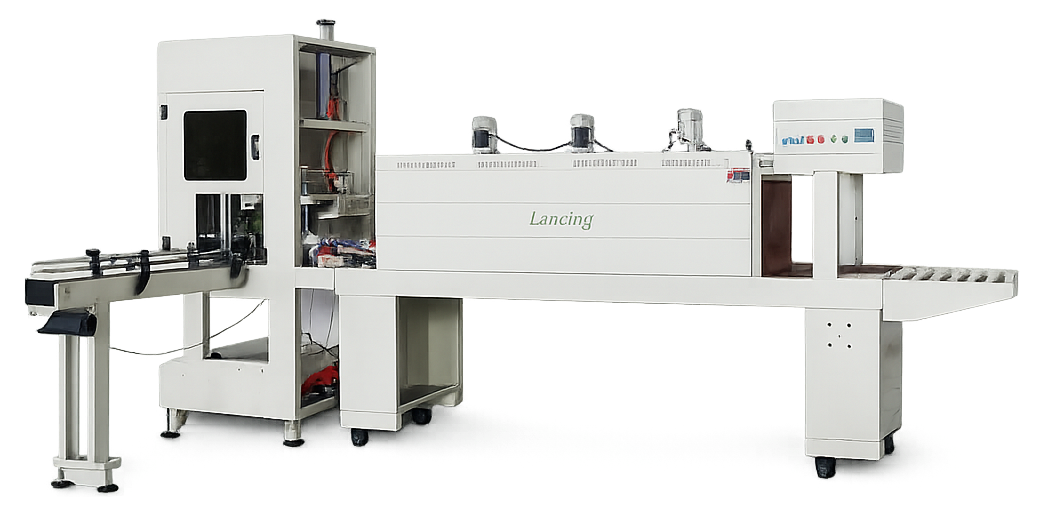
Project route
Product dimensions, weight, pack count, film type, bundle stability and preferred presentation.
How products arrive at the sealer, whether grouping is needed and whether an upstream conveyor requires control integration.
Sealing jaw, film roll width, tunnel aperture, heat output, airflow and conveying speed.
Access, utilities, operator training, format settings and realistic production testing.
Integration points
Product transfer into and out of the sleeve sealer must prevent skewed packs and unstable bundles.
The tunnel needs the right aperture and airflow pattern for the pack dimensions and film material.
Allow safe access for film loading, adjustments, changeovers, cleaning and maintenance.
Electrical supply, air requirements, extraction considerations and site constraints should be confirmed early.
Cooling, accumulation, packing tables, palletising and case packing may affect conveyor speed and layout.
New pack sizes and SKU changes should be considered before finalising sealing width and tunnel size.
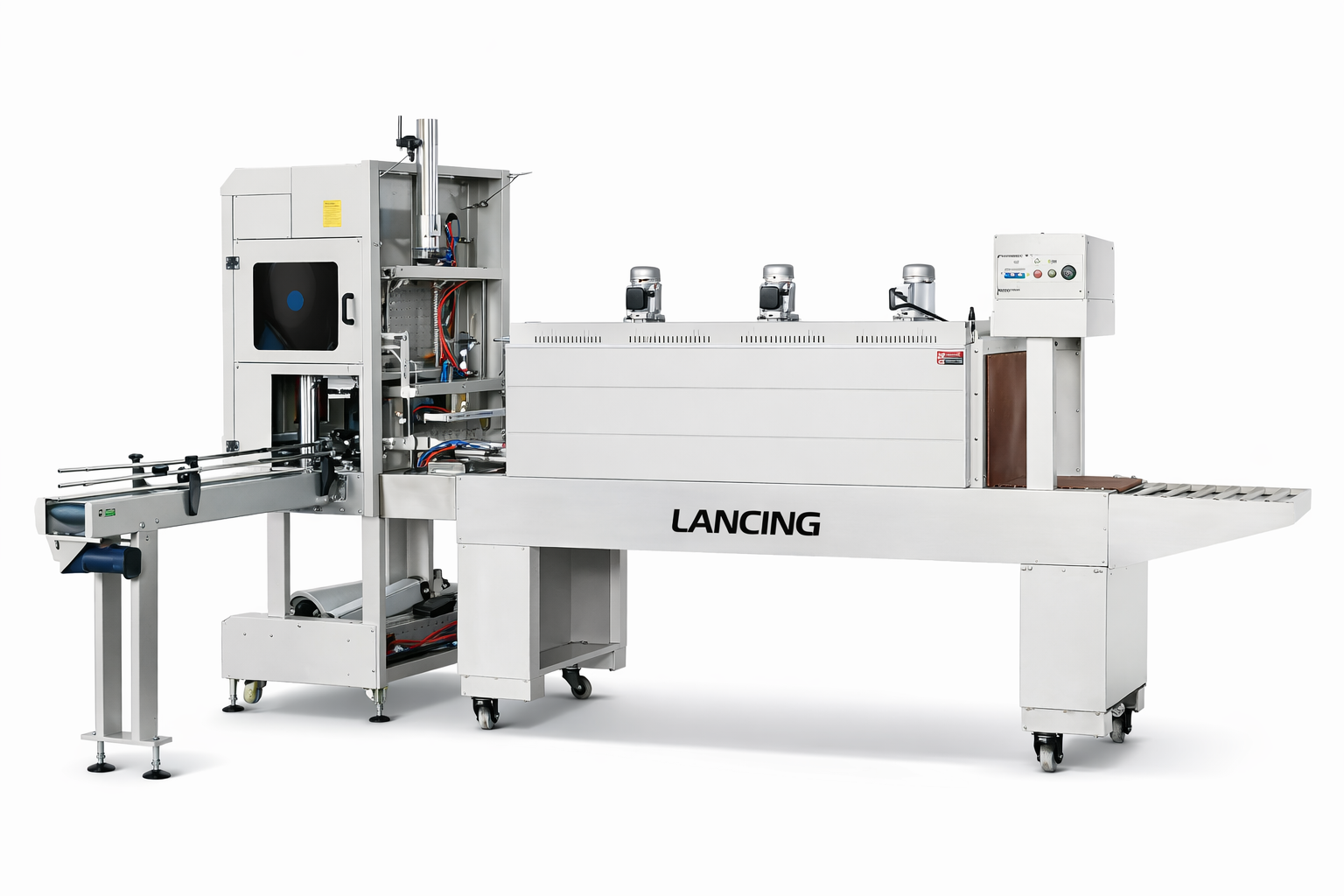
Complete line thinking
Lancing UK can support projects where sleeve sealing is one part of a wider filling, capping, labelling, conveying and end-of-line packing route. This helps reduce interface issues between separate machines and suppliers.
Discuss integrationLine layout choices
The sleeve sealer layout must match how the product arrives and leaves the machine.
Speak to Lancing UK
Send your pack size, bundle format, film type and target output. We will recommend a sleeve sealer, heat tunnel and conveyor layout that suits the production requirement.
Sleeve sealer selection guides
Compare sleeve sealers, shrink tunnels, PE film and multipack wrapping machinery using these guides.
Exact sleeve sealing machine guide for UK production lines.
Sealer and heat tunnel guidance for multipack wrapping.
How to prepare a better quote enquiry for Lancing.
Alternative sleeve wrapper terminology and buyer route.
Tunnel aperture, dwell time, belt speed and airflow guidance.
Bottle pack and beverage multipack wrapping guidance.
Can multipack wrapping and collation details.
PE film sleeve sealing and transit pack guidance.
Tray pack sleeve sealing and tunnel specification.
Line engineering
An automatic sleeve sealer cannot create a consistent bundle from an irregular product stream. The upstream line must deliver the correct count and orientation, while the downstream section must provide enough space for tunnel discharge, cooling and controlled transfer.
Define how products arrive: single file, multiple lanes, manual rows, trays or pre-collated groups. The design should account for gaps, fallen products, blocked downstream equipment and the behaviour of the smallest and largest formats. Guides should control the product without damaging labels, caps or pack surfaces.
The final control philosophy should define ready, run, starved, blocked, fault and emergency-stop behaviour between machines. The specific signals and safety architecture must be agreed for the supplied equipment and site standards; they should not be assumed from a generic drawing. A controlled stop should avoid leaving a pack in an unsafe seal or heated position where practical.
| Mechanical | Conveyor height, line direction, transfer gaps, guide width, pack centreline and maintenance clearances. |
|---|---|
| Production | Incoming rate, group count, gap between bundles, planned output, accumulation and recovery after a stop. |
| Electrical and controls | Available supply, isolators, interface signals, fault handling, guarding and emergency-stop zones. |
| Tunnel discharge | Hot-pack spacing, cooling length, airflow, operator access and protection from premature compression. |
| Downstream | Inspection, coding, accumulation, case handling, palletising or manual lifting of the stabilised bundle. |
Allow space for film-roll handling, seal-area inspection, tunnel access, conveyor cleaning and removal of a rejected bundle without dismantling adjacent equipment. The line layout should also consider heat around the tunnel, ventilation, pedestrian routes and the position of electrical panels. For wider end-of-line controls and multi-machine projects, see Lancing's dedicated packaging-line integration information.
Integration FAQs
Often yes, but the project must confirm available space, conveyor height, product flow, line speed, control interfaces, heat-tunnel discharge and how the finished bundle will be handled.
The agreed controls should stop or inhibit upstream feeding in a controlled way and prevent excessive accumulation. The precise sequence depends on the final machine interfaces and risk assessment.
There is no universal length. It depends on film, pack mass, tunnel settings, ambient conditions, spacing and the next handling operation. Confirm it during the sample and layout assessment.
The control relationship must be engineered for the complete line. Ready, run, starved, blocked and fault signals should be agreed rather than assumed, including who owns each stop condition.
Provide a layout, conveyor heights, line direction, product rate, bundle pattern, utilities, control expectations, available space and the required handover point after cooling.
Plan every interface
Send the existing line drawing and pack samples so Lancing can assess collation, controls, tunnel spacing, cooling and downstream handling together.
Connected-line control
A mechanically connected line also needs a clear operating philosophy. Starved infeed, blocked discharge, emergency stops, guard openings, tunnel warm-up and restart should leave products and people in a controlled state.
| Interface | Questions to close |
|---|---|
| Upstream to collation | How are products counted, spaced, stopped and released without creating incomplete or unstable groups? |
| Collation to seal section | How is the group kept square through a push or transfer, and what happens to a partial collation? |
| Seal section to tunnel | How are sealed packs spaced so film and airflow are not disturbed at the tunnel entrance? |
| Tunnel to cooling | How is hot film supported and prevented from being compressed before it stabilises? |
| Discharge to downstream equipment | Which ready, blocked, fault and restart signals are exchanged, and where can safe accumulation occur? |
Record control ownership for each stop and recovery state. A local machine restart must not cause unexpected movement elsewhere on the line. Any final safety-related control design requires competent assessment of the complete integrated installation.
Line engineering questions
A sleeve sealer line needs agreed mechanical handovers and control states from product arrival to cooled bundle discharge.
Agree ready, run, starved, blocked, fault, stop and restart behaviour for every connected machine, together with who owns each state and how products already in the tunnel are handled.
The exact interface depends on the controls architecture, but the functional description should prevent an upstream surge into a stopped wrapper and prevent hot packs accumulating at a blocked discharge. Include normal production, planned stops, faults, emergency conditions and recovery during FAT and site acceptance.
See the conveyor integration guide.
Accumulation should begin only after the pack has enough support and cooling to tolerate contact pressure, stopping and restarting without film damage or bundle movement.
Confirm discharge length, cooling airflow, conveyor surface, side guides, back pressure and the longest expected blocked period. A pack that survives continuous running may fail when it is stopped hot against another bundle, so blocked-discharge testing belongs in the acceptance plan.
Collation commonly breaks down because arrival gaps vary, products contact one another unevenly, transfer openings are too large, guides are poorly positioned or the group is pushed without adequate support.
Observe where the pattern first changes. Correct the infeed and transfer cause before adding more film tension or tunnel heat. Unstable products may need a pusher, clamp, tray, pad, controlled back pressure or a different feed direction.
Open the collation guide for unstable products.
Provide a dimensioned line layout with product direction, conveyor heights, access routes, guarding boundaries, utilities, upstream and downstream equipment, operator positions and maintenance clearances.
Also identify roof height, doors, columns, drains, heat-sensitive services, ventilation and the route for bringing each machine section into position. Photographs help, but they should support rather than replace measured dimensions and agreed datum points.
Use the site-preparation guide.
Packaging-line integration
Packaging-line integration is more than placing conveyors between machines. The sleeve sealer, collation equipment, tunnel and downstream system need agreed mechanical handovers and control states so that normal running, starved infeed, blocked discharge, faults and restart do not create incomplete bundles or damage hot packs.
Record conveyor heights, usable widths, transfer gaps, line direction, guide positions and support beneath the smallest and heaviest pack. Check every transition with production-equivalent weight.
Define ready, run, stop, fault, starved and blocked signals; who owns each state; and how product already inside the wrapper or tunnel is handled safely.
Provide access for film loading, clearing, cleaning and inspection without compromising guarding or trapping product between isolated machines.
The collation page covers bundle formation, while the site-preparation guide covers utilities, space and installation evidence. Include the full upstream and downstream sequence when requesting a line review through the enquiry route.
Integration decision points
Line integration should define how the product enters the collation area, how the sleeve sealer manages stops, how the tunnel discharges warm packs and how downstream equipment receives the finished bundle. These handovers affect output, reject handling and day-to-day operation.
A good scope lists each interface rather than only naming the machines. This includes mechanical height, conveyor direction, controls, sensor logic, accumulation, guarding boundaries, maintenance access and what happens when either the upstream or downstream line stops.