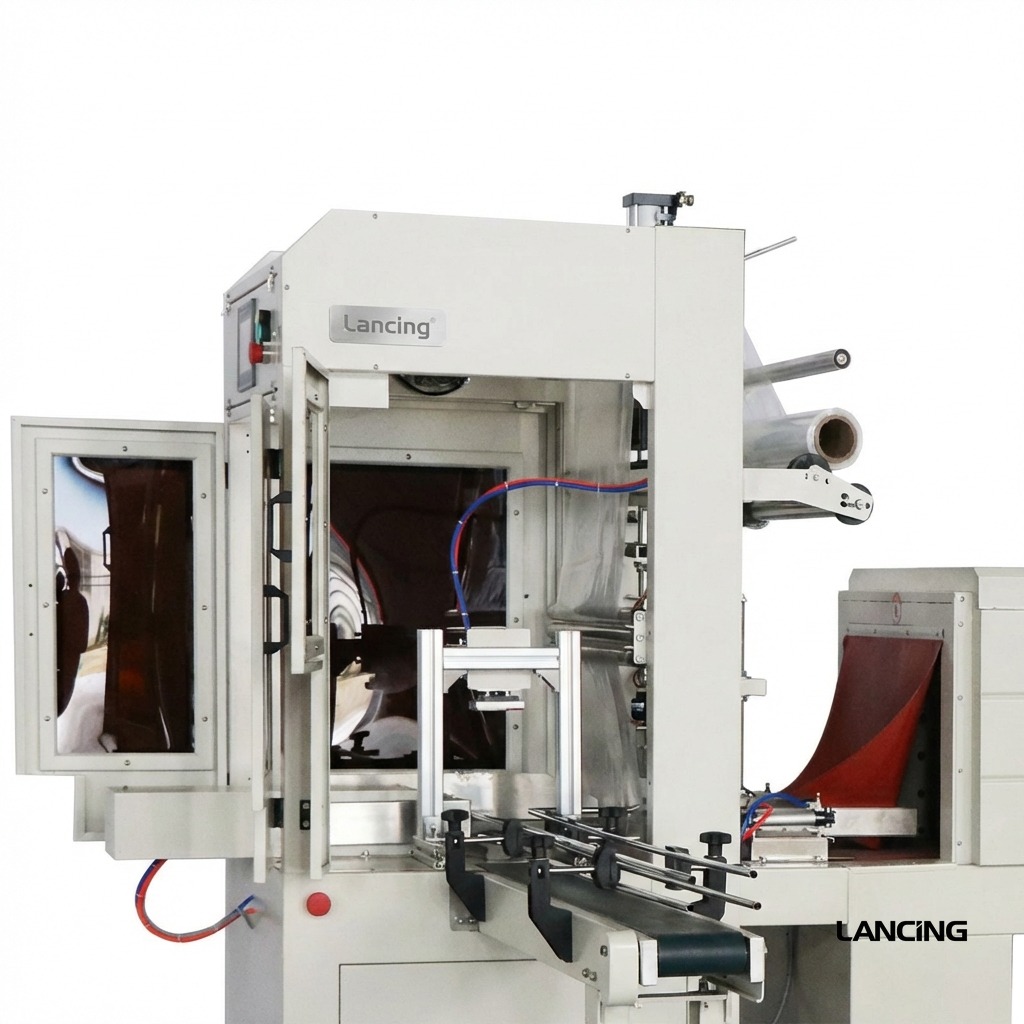
Film sealing section
Feeds and seals film around the pack. This is where product size, film width and bundle presentation are critical.

Sleeve sealer machines
Compare the main machine configuration for sleeve sealing projects and send Lancing UK the product details needed to confirm suitability.
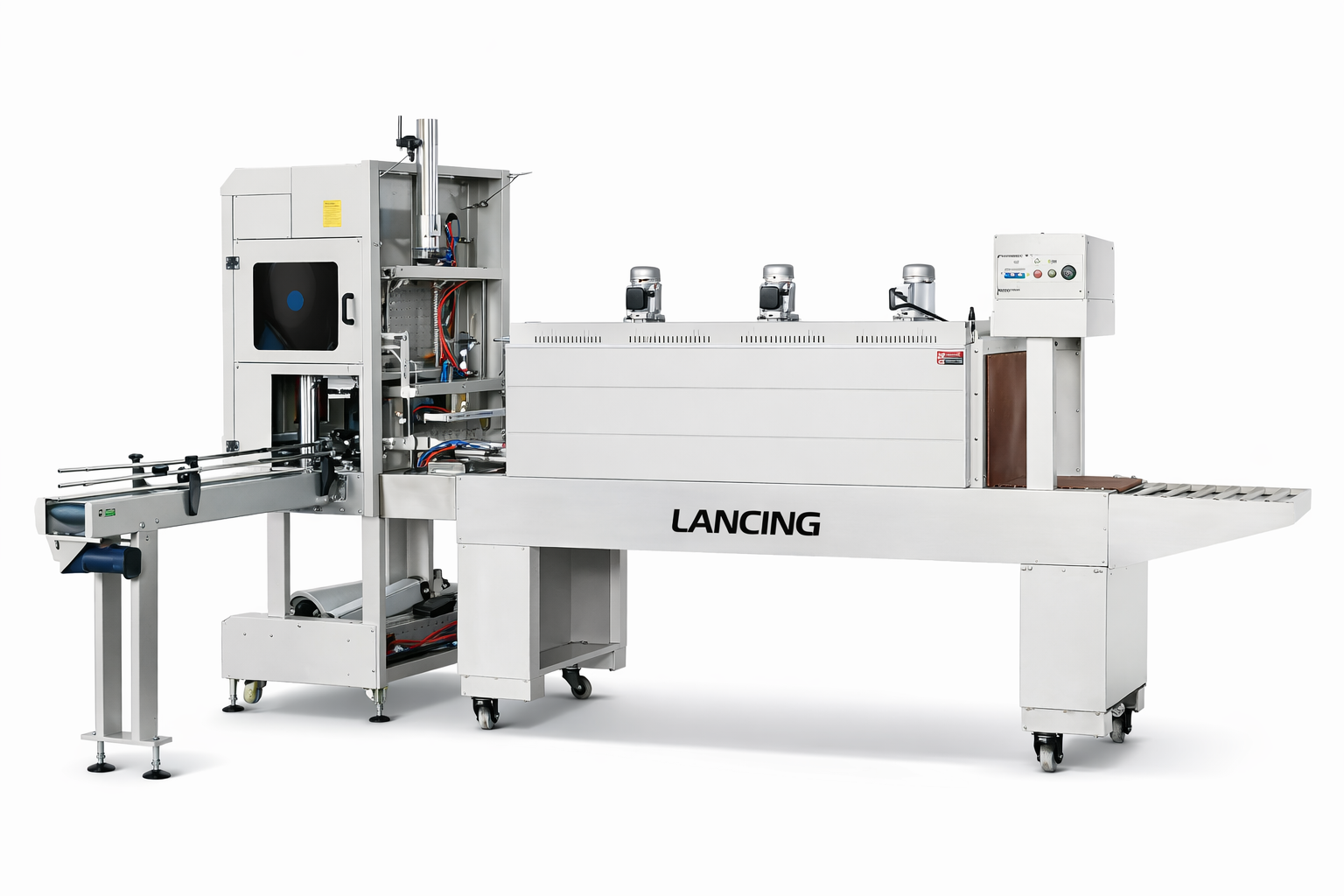
Pro Range
The Lancing UK LU-SPL4 Automatic Bottles Wrapping and Shrinking Packaging Machine is designed to wrap and seal shrink film around bottled water, soft drinks and similar products. The system combines film wrapping with a shrink tunnel so the finished pack leaves the line with a tight, professional shrink-wrapped finish.
Machine modules
Feeds and seals film around the pack. This is where product size, film width and bundle presentation are critical.
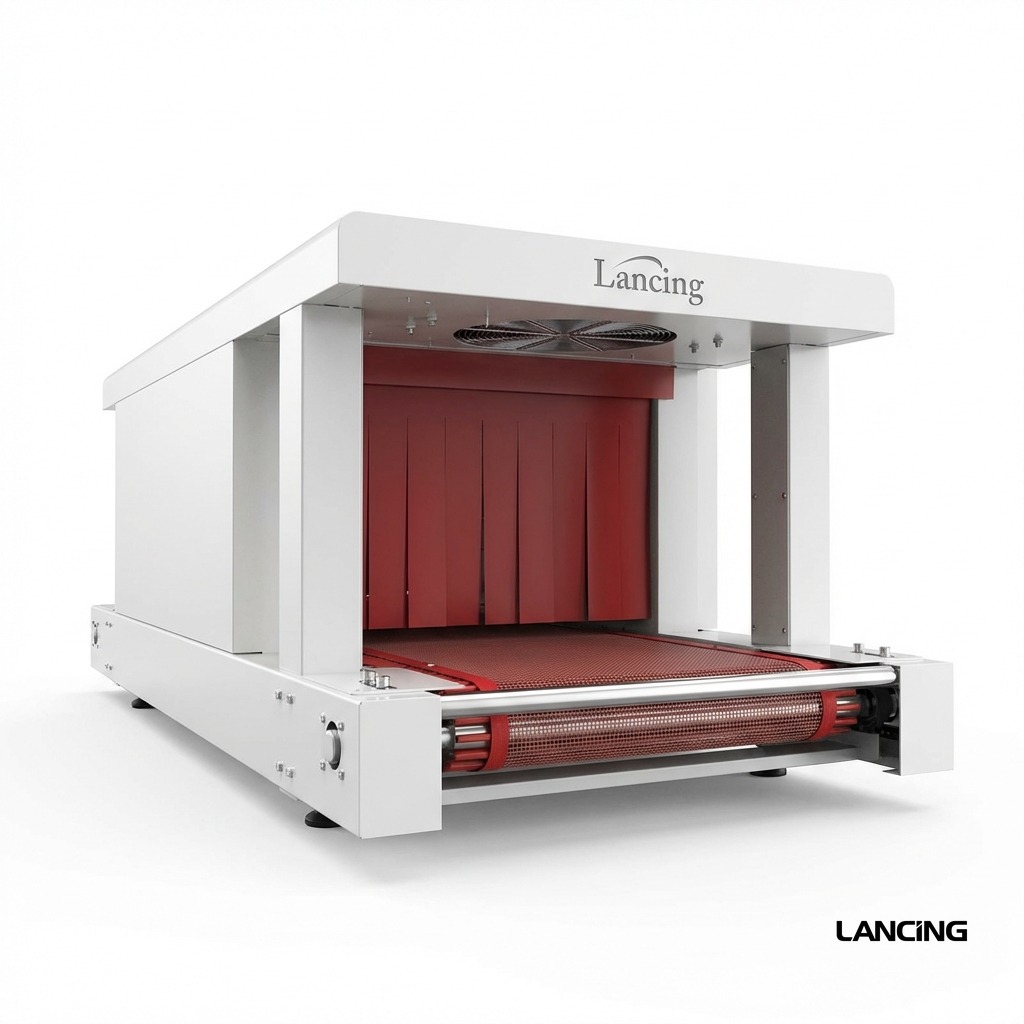
Applies controlled heat and conveyor movement to shrink the film evenly around the pack.
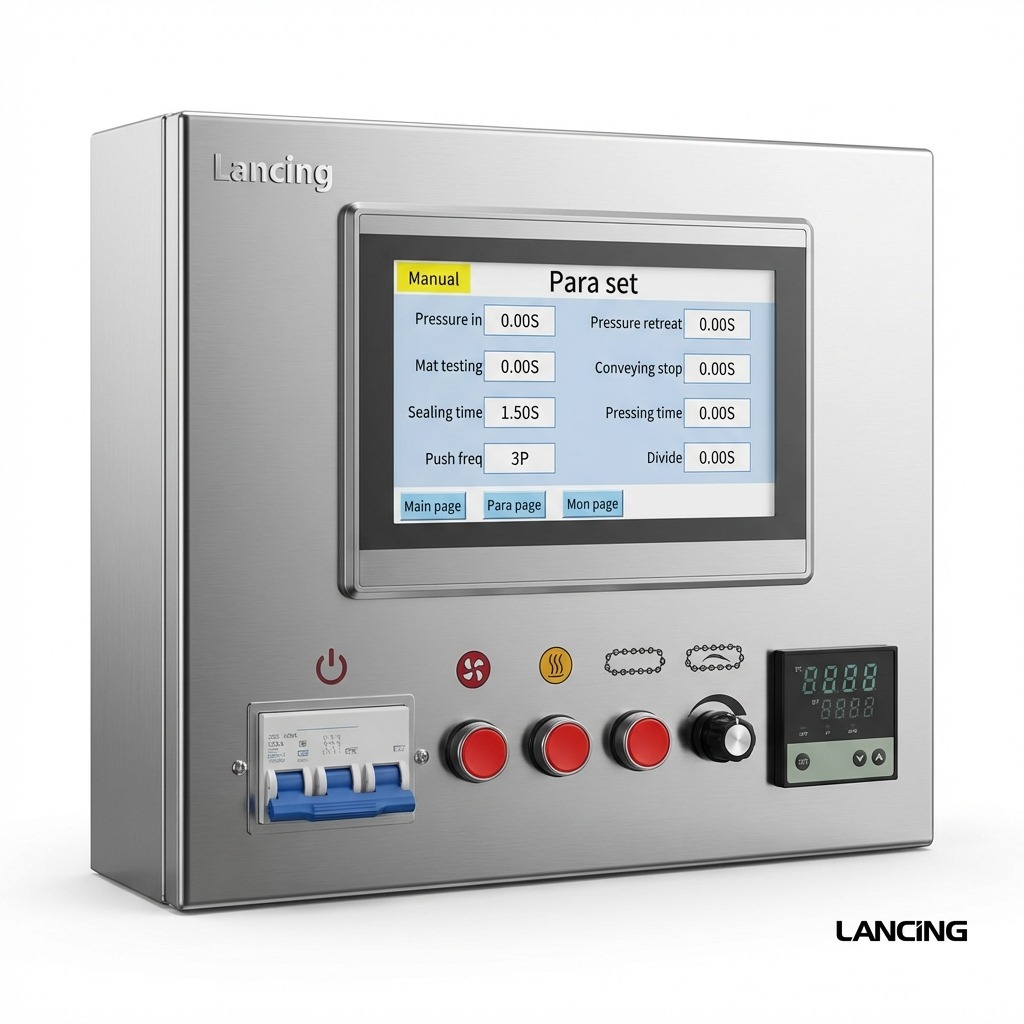
Operator settings, conveyor speed and sealing/tunnel parameters are confirmed against the production requirement.
Comparison
| Machine type | Typical use | Project notes |
|---|---|---|
| Sleeve sealer | Bundled bottles, grouped packs and transit packs. | Often paired with a heat tunnel and infeed conveyors. |
| L-sealer | Individual products or presentation packs needing an L-shaped seal. | Often chosen for cartons, boxes or packs needing neat presentation wrapping. |
| Sleeve applicator | Decorative or tamper-evident sleeve application around containers. | Different objective: labels/sleeves around containers rather than multipack bundling. |
| Heat tunnel | Shrinking film after sealing or sleeving. | Tunnel size, speed, airflow and heat control drive final pack quality. |
Machine routes
These pages help narrow the machine route before a quotation.
Speak to Lancing UK
Send your pack size, bundle format, film type and target output. We will recommend a sleeve sealer, heat tunnel and conveyor layout that suits the production requirement.
Sleeve sealer selection guides
Compare sleeve sealers, shrink tunnels, PE film and multipack wrapping machinery using these guides.
Exact sleeve sealing machine guide for UK production lines.
Sealer and heat tunnel guidance for multipack wrapping.
How to prepare a better quote enquiry for Lancing.
Alternative sleeve wrapper terminology and buyer route.
Tunnel aperture, dwell time, belt speed and airflow guidance.
Bottle pack and beverage multipack wrapping guidance.
Can multipack wrapping and collation details.
PE film sleeve sealing and transit pack guidance.
Tray pack sleeve sealing and tunnel specification.
LU-SPL4 engineering review
The LU-SPL4 data provides a useful selection envelope, but the equipment must still be confirmed against representative products, film and line conditions. A valid machine decision considers both the listed limits and the conditions required to hold a stable bundle through sealing, shrinking, cooling and discharge.
| Area | Verified reference | Engineering check |
|---|---|---|
| Output | 0–6 packs per minute | Test sustained running, normal gaps, stops and restarts with the intended collation method. |
| Product range | Bottles 60–120 mm diameter and 100–330 mm height | Confirm stability, guide contact and bundle formation using the smallest and largest production formats. |
| Pack size | 240 × 120 × 100 mm minimum; 400 × 120 × 330 mm maximum | Check orientation, film overlap, clearances and the finished pack rather than product dimensions alone. |
| Load | Up to 20 kg | Confirm conveyor support, acceleration, transfer gaps and manual handling of the cooled bundle. |
| Film route | PE film; 0.03–0.25 mm; maximum roll width 560 mm | Trial the actual grade, thickness, shrink behaviour and roll condition. |
| Tunnel | LU-BSPN6040; conveying speed 0–15 m/min | Record accepted temperature, airflow and belt speed for each pack format. |
The supplied reference specification does not state a separate seal-bar working length. It should not be inferred solely from the maximum pack size or film roll width. Lancing should confirm the required opening, film overlap, cut position and guarding from the bundle drawing and representative samples. The seal path must remain clear of product edges, tray projections, loose labels and contamination.
Format changes may require guide, collation, film, seal and tunnel-setting adjustments. The line layout should leave safe access for film loading, seal-area inspection, conveyor cleaning and removal of mis-collated packs. Daily checks should focus on the film path, seal surface, sensors, guides, conveyor tracking and debris around heated areas. Any maintenance procedure must follow the final machine instructions and site risk assessment.
Machine specification FAQs
Not automatically. Dimensions are only part of the assessment. Product stability, bundle pattern, weight, surfaces, film behaviour, transfer gaps and the required finished-pack standard also need to be trialled.
It is the listed packing-speed range for the reference configuration. A production commitment should be based on an agreed sample, pack pattern, film, infeed method and sustained trial conditions.
The listed wrapper film is PE shrink film. The reference tunnel lists PVC, POF and PE compatibility, but that does not change the wrapper's stated PE route. Confirm any alternative film requirement before specification.
Use the real pack dimensions, film wrap path, overlap and cut position. The supplied reference data does not publish a separate seal-bar dimension, so it should be confirmed by Lancing rather than guessed.
Run the smallest and largest formats, change the film and guides as applicable, verify sensor detection, check restart behaviour and confirm that accepted tunnel settings can be recorded and repeated.
Depending on the project, the line may need product spacing, collation, infeed conveyors, tunnel discharge, cooling, accumulation or onward case and pallet handling. These interfaces should be included in the layout review.
Confirm the machine envelope
Lancing can review the LU-SPL4 reference range against the actual bundle, film, output and site layout before a final configuration is proposed.
Machine-to-line handover
The wrapper and tunnel can only deliver a repeatable bundle when the product arrives in the correct pattern and the hot pack leaves without being distorted. A quotation should therefore define the interfaces around the machine as carefully as the wrapper itself.
| Line area | Information to fix before approval | Evidence at acceptance |
|---|---|---|
| Infeed and collation | Product orientation, row or bundle pattern, guides, spacing, upstream release signal and behaviour after a short stop. | The smallest and largest formats enter squarely without product overlap, rebound or unstable gaps. |
| Wrapper and seal | Production PE film, roll format, film path, overlap, seal and cut position, and access for safe changeover and cleaning. | The sleeve is centred and the seal remains continuous through a representative run. |
| Shrink tunnel | Pack clearance, belt or support arrangement, temperature, airflow, dwell, loading and permitted product heat exposure. | The approved pack shrinks consistently at normal line loading, not only after an idle tunnel. |
| Cooling and discharge | Required stabilisation distance, airflow, conveyor height, accumulation pressure, bends, lifts and manual or automatic handling. | The cooled bundle survives the intended transfer, accumulation and lifting method. |
| Controls and safety | Ready, starved, blocked and fault states; restart sequence; emergency-stop interfaces; guarding boundaries and operator access. | Controlled stops and restarts do not release an incomplete bundle or create a downstream collision. |
For the listed LU-SPL4 route, the published 0–6 packs per minute is a reference value. A practical acceptance run should begin from the agreed warm state, process the normal bundle at representative spacing, include a starved infeed and blocked discharge response, and then restart without losing collation or pack quality. Where more than one format is required, the smallest, largest and least stable formats should all be included.
The final record should identify the product, bundle pattern, film, guide positions, seal controls, tunnel temperature and airflow controls, conveyor settings and the approved cooled pack. That record provides the basis for repeatable changeover and maintenance checks.
From reference data to final configuration
The verified LU-SPL4 and LU-BSPN6040 data defines a reference envelope. Final suitability also depends on bundle stability, film behaviour, transfer geometry, tunnel loading, cooling and the operating conditions used to establish output.
See tray-supported can bundles presented to the wrapping and sealing section.
Use representative formats and define repeat-running, stops, restarts and finished-pack checks.
Plan services, delivery access, working space, cooling and connected conveyors.
| Published reference helps with | Project evidence must still confirm |
|---|---|
| Basic product, pack, film and tunnel envelope | Real bundle orientation, stability, support, transfer clearances and seal position. |
| Listed output and conveyor-speed ranges | Sustainable accepted production with normal gaps, stops, restarts and upstream/downstream constraints. |
| Reference voltage, power and dimensions | Final supply, complete installed load, air where required, delivery route and maintenance access. |
| PE film compatibility for the wrapper | Approved supplier grade, width, thickness, roll format, settings and finished-pack quality. |
Machine selection questions
The wrapper, seal system, shrink tunnel and discharge should be selected as one process around the real pack and production method.
Choose the automation level from production pattern, product presentation, labour input, changeover frequency and the way stops and restarts must be controlled.
Semi-automatic equipment can suit intermittent batches and applications where the operator provides controlled loading. Automatic equipment is more appropriate when products arrive in a repeatable stream and the sleeve sealer must exchange signals with connected conveyors. Trial the actual formats before treating automation as a speed-only decision.
An inline route is usually considered when the pack can remain stable while travelling straight through the film and the factory line already follows that direction.
A side-feed route can be useful when a positive push is needed to form or transfer the bundle at right angles to the tunnel. The correct choice depends on collation, tray support, product stability, available floor space, transfer gaps and the required format range rather than on the feed name alone.
Read the inline versus side-feed comparison.
Possibly, but every required format must fit the wrapper, film path, seal position, tunnel aperture and conveyor transfers while remaining stable at the intended output.
A broad mechanical opening does not prove that the smallest and largest packs will both run well. Confirm adjustment ranges, guides, pusher contact, film width, changeover steps, recipe control and first-off approval for the complete SKU matrix.
Use the multi-format decision guide.
The maximum usable pack is set by the most restrictive part of the complete system, which may be the infeed, product guides, sealing opening, film width, tunnel aperture or discharge path.
Measure the bundle in its real orientation and include tray lips, protrusions, temporary movement and the clearance needed for safe transport. The pack must also remain within the load and stability limits of every conveyor and transfer, so a nominal opening dimension is not a complete suitability statement.
Review the verified specification and project variables.
Machine-selection evidence
A sleeve sealer machine should be selected around the finished bundle, the intended PE film and the line conditions around the wrapper. The LU-SPL4 reference data gives a useful starting point for bottle-style multipacks, but a quotation still needs to confirm the actual format, film, collation and discharge method.
When several packs are expected on one route, the heaviest or largest pack is not always the difficult one. A lighter or less stable pack may create more collation work, while a tighter tunnel pitch may reduce accepted output if the film does not cool before discharge.
Additional specification routes
Some buyers search for a sleeve sealer, some for a twin-roll sleeve wrapper, and others start with film or pack-pattern problems. These routes all need the same practical checks before a machine can be confirmed.
Understand upper and lower PE film rolls, seal overlap and film path requirements.
Check rows, lanes, trays, pads and trayless formats before selecting a machine.
Plan sealing, film path, conveyor and tunnel spares around real production duty.