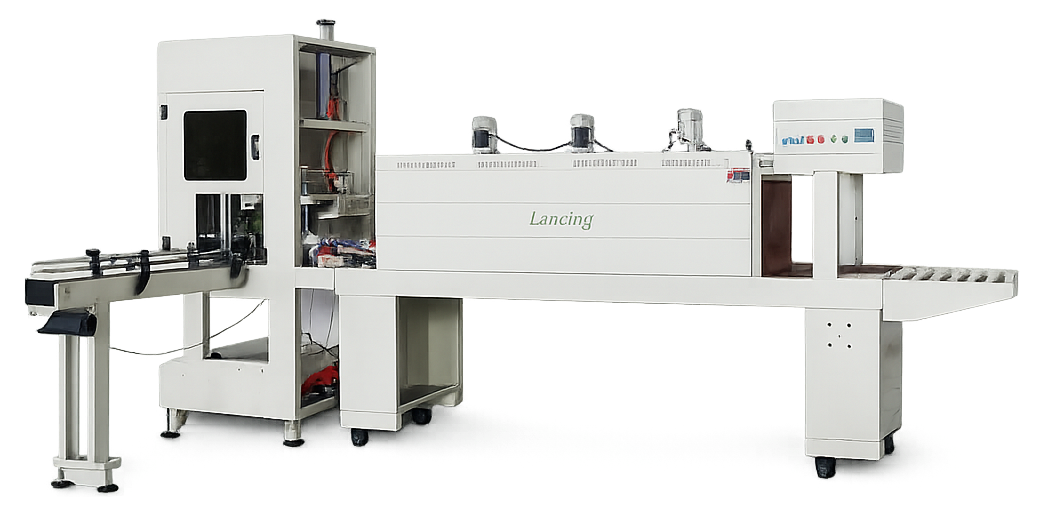
Sleeve sealer maintenance support and production reliability
Maintenance access and support should be considered before buying a sleeve sealer. Good specification considers cleaning, film path access, tunnel maintenance, spare parts and operator training.
What to consider before buying
A machine should fit the production environment and allow practical access to the sealing area, film path, tunnel belt and conveyors.
Operational reliability
Correct product handling, film setup and tunnel settings reduce avoidable stoppages and improve pack consistency.
Support information
Clear model details, machine photos and application data help Lancing advise on service, spares or replacement machinery routes.
Lancing UK specification support
Match the sleeve sealer, shrink tunnel and conveyors to the pack
For a reliable result, the sleeve sealing route should be considered as a complete system: product grouping, film wrapping, sealing, heat tunnel recovery, cooling and discharge. The pages below help narrow the right route before you contact Lancing.
Sleeve sealer maintenance support and production reliability FAQs
Do sleeve sealers need regular maintenance?
Yes. Sealing areas, conveyors, film handling and shrink tunnels all need appropriate inspection and maintenance.
Can poor film setup cause machine issues?
Yes. Incorrect film width, tension or tunnel setup can cause poor pack finish and avoidable downtime.
What should I send for support advice?
Send photos, machine details, pack dimensions, film specification and a description of the issue or project goal.
Speak to Lancing UK
Need a practical sleeve sealer recommendation?
Send product size, pack format, film type, target output and available floor space. Lancing can recommend a sleeve sealer, shrink tunnel and conveyor route for the application.
Use condition records to prevent repeated seal and tunnel faults
Maintenance should follow the final manufacturer's instructions and the site's competent risk assessment. The production record should also show when film, products, settings or line conditions changed, because not every pack defect is a mechanical failure.
Maintenance and process-control record
Frequency or trigger
Items to review
Pre-start
Guards and stops, visible damage, cleanliness, film path, conveyor condition, airflow openings and safe access.
Format or film change
Correct material and recipe, guides, seal area, tunnel window, first-off pack and retained approval evidence.
Planned maintenance
Manufacturer-specified inspection, wear, lubrication where applicable, electrical and pneumatic condition, fans, conveyor and safety functions.
After a fault
Symptom, location, product, film, settings, recent change, action taken and evidence that the accepted condition was restored.
Keep operator checks and engineering maintenance clearly separated
Reliable sleeve sealing depends on operators recognising normal defects quickly and engineering support maintaining the film path, sealing components, belts, sensors, tunnel condition and guarding. Mixing these responsibilities can lead to unapproved settings and repeat defects.
Daily checks can focus on cleanliness, film route, obvious wear, blocked discharge and pack quality. Engineering maintenance should address repeat seal faults, damaged components, sensor issues, belt tracking, electrical faults and any unsafe or unusual machine condition.
Repeat sleeve sealer quality issues are not always solved by changing settings. Wear, contamination, film tracking, tunnel condition and sensor faults can all affect seal and shrink quality.
A practical support enquiry should include machine identification, photographs, examples of the fault, run pattern and recent maintenance notes. This helps Lancing decide whether the likely route is a spare part, operator training, film review, service support or a wider line-control issue.